Part Four — What Comes Next
Practical Alternatives
Practical

The previous chapters have been doing one thing: dismantling. Dismantling the historical myth of marriage, its biological assumptions, its statistical inevitability, and its legal monopoly. This chapter does something entirely different: building.
Not speculation. Not utopia. But concrete practices that are already happening, already being tested — and, their proponents argue, capable of scaling. From Cebu's "Right to Care" program in the Philippines, to Catalonia's mutual support cohabitation agreements, to relationship education in Dutch schools — these are not theories. They are experiments that real people are running right now.
If marriage is no longer the only legitimate container for intimate commitment, what do the alternatives look like? The answer falls into four domains: legal recognition, social infrastructure, education, and cultural narrative.
The Legal Domain: From Status to Function
The core logic of current law is status: you are married, therefore you get rights. You are not married, therefore you get nothing. The problem with this logic is that it binds rights to a specific relationship form rather than to what the relationship actually does.
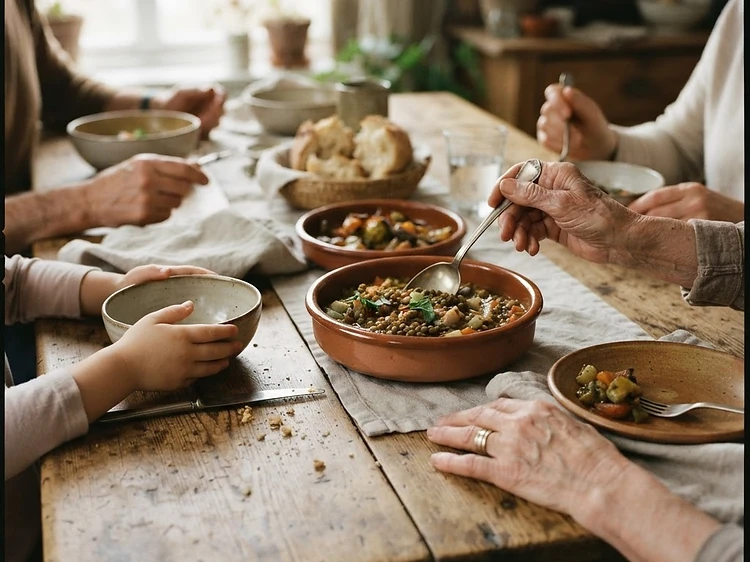
A more functional logic is: if a relationship provides care, economic mutual support, emotional sustenance, and practical interdependence, it could receive some form of recognition — whether it is called marriage, partnership, friendship, or something else entirely.
The strongest objection to functional recognition is administrability: status is easy to verify (you either have a marriage certificate or you don't), whereas function — caregiving, interdependence — is harder to assess, and harder to police for fraud. This is a real tension, not a straw man. The experiments below suggest it is manageable, but it is not trivial.
The Cebu Model: Administrative Recognition of Caregiving Rights
In June 2026, the province of Cebu in the Philippines issued an emerging provincial order, establishing the "Right to Care Program." The program allows an individual to designate a "care partner" who, regardless of marital status, can visit them in provincial hospitals, serve as an emergency contact, participate in medical discussions when explicitly authorized by the patient, assist with social welfare transactions, and provide support during disaster response.
Crucially, the program "does not create marital, civil union, inheritance, or property rights." It is limited to administrative recognition "for medical, emergency response, and social protection purposes." The executive order explicitly extends its coverage to LGBTQIA+ individuals, cohabiting partners, and "other persons who provide mutual care and support."
This is not a substitute for marriage. It is a supplement: in the absence of marriage, it provides a minimum level of legal visibility for caregiving relationships. The cost is low, the controversy is minimal, and the effect is direct — it solves a concrete problem: when you are rushed to the emergency room, who has the right to be involved in your care?
(The details of an emerging provincial order should be verified against the primary text before formal publication.)
The Catalan Model: Mutual Support Cohabitation Agreements
Catalonia's legal framework for "mutual support cohabitation agreements" (acords de convivència i suport mutu) offers another approach. This is a legal contract that allows two or more people — not limited to romantic partners — to formally register their cohabitation and mutual support relationship, thereby gaining certain rights and protections. Academic research notes that such agreements "have transformative potential," extending legal recognition beyond family and partners to non-kin caregiving networks.
The "Care Agreement" Proposal
Chilean scholar Andrea Salazar Navia, in research published in 2025, proposed something more radical: that the law should recognize friendship as a legitimate form of affective relationship and create "care agreements" (acuerdos de cuidado) as a legal instrument to bring non-familial caregiving networks into the legal framework. She argues that neither constitutions nor family law grant friendship the same legal status as partnership or family, which reflects the exclusion of friendship as a legitimate form of affective relationship.
The core insight is this: care is the behavior the law could recognize, rather than tying recognition only to the relationship form itself. If you are caring for a sick friend, why does the law not recognize you? If you have lived with a friend for fifteen years, why can you not be their legal decision-maker?
The Social Infrastructure: Building Space for Non-Traditional Relationships
Legal recognition is only the first step. Without social infrastructure, legal rights remain on paper.
Cohousing and "Chosen Families." Social scientist Bella DePaulo, in her work on single life and non-traditional relationships, has documented the rise of cohousing communities and chosen families — groups of people who are not related by blood or marriage but who function as family in many meaningful senses. They share meals, care for each other's children, support each other through illness and aging. The law, in most jurisdictions, treats them as strangers.
Urban Planning for Diverse Households. Housing policy still assumes the nuclear family. Zoning laws favor single-family homes. Tax incentives often reward married couples. Social services are designed for families with children. A relationship landscape that recognizes diversity requires infrastructure that supports it: shared housing models, co-living arrangements, and community spaces that are not organized around the married couple as the fundamental unit.
The "Lat" Phenomenon. In the Netherlands, an estimated 10% of adults are in "lat relationships" (living apart together) — up from around 8% in 2013, according to Statistics Netherlands (CBS). This is a deliberate choice by people who want commitment without cohabitation, intimacy without enmeshment. The law has no category for it — though the trend is demographic as much as ideological; not every lat couple is making a statement about marriage.
Education: Teaching What We Actually Need to Know
Perhaps the most radical practical alternative is not legal or infrastructural. It is educational.
The Dutch "Relatievorming" Curriculum. The Netherlands has long required schools to teach "relatievorming" (relationship formation) as part of the curriculum. The focus is not on abstinence or even on sex education narrowly defined, but on the skills of building and maintaining relationships: communication, conflict resolution, understanding consent, recognizing abuse. In recent years, some schools have expanded this to include education about the biology of desire and the reality of passion decline.
What Young People Need to Know. Taking the earlier chapters' findings seriously, several things belong in this education before young people commit to lifelong partnership:
- Passion tends to fade on a predictable timeline. This is normal, not a sign of failure.
- Intimacy and desire operate on different systems. Emotional closeness can diminish eroticism.
- Marriage is one option among several. There are legal structures that may fit a given relationship better.
- Infidelity is common, and the desire for variety is widespread. Understanding this is more useful than pretending otherwise.
Relationship Education for Adults. The education gap does not end at 18. Most adults have never been taught how to navigate the transition from passionate love to companionate love, how to negotiate desire discrepancy, how to renegotiate the terms of a relationship as it evolves, or how to leave a relationship that no longer serves them without destroying themselves financially and emotionally.
The Cultural Narrative: New Stories for New Realities


The most powerful alternative to the marriage monopoly is not only legal or institutional. It is narrative.
The "Single at Heart" Narrative. DePaulo's work challenges the assumption that single life is a waiting room for marriage. "Single at heart" people are not single because they haven't found the right person. They are single because single life is their best life. This is not a pathology. It is a valid way of being.
The "Chosen Family" Narrative. Queer communities have long practiced chosen family — networks of people who are not blood or legal relatives but who function as family. This model is not just for queer people. It is for anyone who has built a life with friends, caregivers, co-parents, or other non-traditional partners.
The "End of the Fairy Tale" Narrative. The most radical narrative shift is simply this: the fairy tale can end badly. Not always, but often enough. Marriage is not a guarantee of happiness. It is a legal, emotional, and biological container that works for some people and fails for many others. Pretending otherwise is not optimism. It is denial.
What This Would Look Like
If we took these practical alternatives seriously, the relationship landscape might look like this:
- A menu of legal forms. Marriage, registered partnership, cohabitation agreements, care agreements, mutual support cohabitation — each conferring a defined set of rights and obligations. People choose the form that matches their actual relationship.
- Care as an organizing principle. Rights and protections are tied to caregiving functions, not only to conjugal form.
- Education from adolescence through adulthood. Young people learn about the biology of desire, the reality of passion decline, and the diversity of relationship models before they commit to any one of them.
- Cultural permission to define commitment on your own terms. No relationship is "just a friendship" if it provides what marriage provides. No relationship is "just a phase" if it lasts decades.
- A social safety net that doesn't assume marriage. Housing policy, tax policy, and social services designed for a diversity of household forms, not just the married couple.
The Resistance, Again
None of this is easy. The Polish veto of 2026 showed that even minimal reforms face fierce opposition. The Korean Life Partnership Act, introduced by Representative Yong Hye-in in 2023, remains stalled. In most jurisdictions, the legal infrastructure for non-conjugal recognition simply does not exist.
But the pressure is building. Single-person households now account for more than a third of all households in South Korea, and are projected to keep rising. Cohabitation without marriage is the norm for younger generations across much of the developed world. The gap between how people live and how the law recognizes them is widening, and that gap produces real harm: people denied hospital visitation, inheritance, and the ability to care for the person they love.
The practical alternatives are not a fantasy. They are, increasingly, a pressing need. The question is whether they will be built deliberately, through reform, or chaotically, through individual workarounds. The former is preferable. The latter is already happening.
Further Reading
- Cebu province "Right to Care" an emerging provincial order (June 2026).
- Catalonia's mutual support cohabitation agreements.
- Andrea Salazar Navia (2025) — on friendship as a legal relationship.
- Bella DePaulo — on single life and chosen families.
- Dutch relationship education policy.
- Statistics Netherlands (CBS) — on living-apart-together relationships.
As members add their voices, a live bar will appear here showing where this community sits in relation to the chapter — not agreeing or disagreeing with a verdict, but locating their own experience.
No voices here yet. Be the first to add yours.
Be kind. Be honest. Be on topic.
Sign in to add your voice to this chapter.